Jamal Ahmed has translated the enchanting beauty of the Sundarbans in this 2003 painting “The Sundarbans”. With his seamless brush-stroke and vivid imagination, he has captivated the hypnotic beauty of the forest in his canvas. The shades of green against the gloomy neutral tone re-created the charm of the Sundarbans with his magical naturalist manner. “The Sundarbans” is thus a true echo of the world’s largest mangrove forest, which is located in the south of the country. In its every layer, it holds something new, something surprising. Its pristine ecosystem offers an array of yet to be discovered sounds and sights. As much as it lures us with its charm, it protects us day and night from the extremities of nature that threaten the country from time to time in the form of cyclones. Surrounded by meandering streams, creeks, and rivers, the Sundarbans is a sea-level forest island, a home for animals, birds, and trees.

Jamal Ahmed
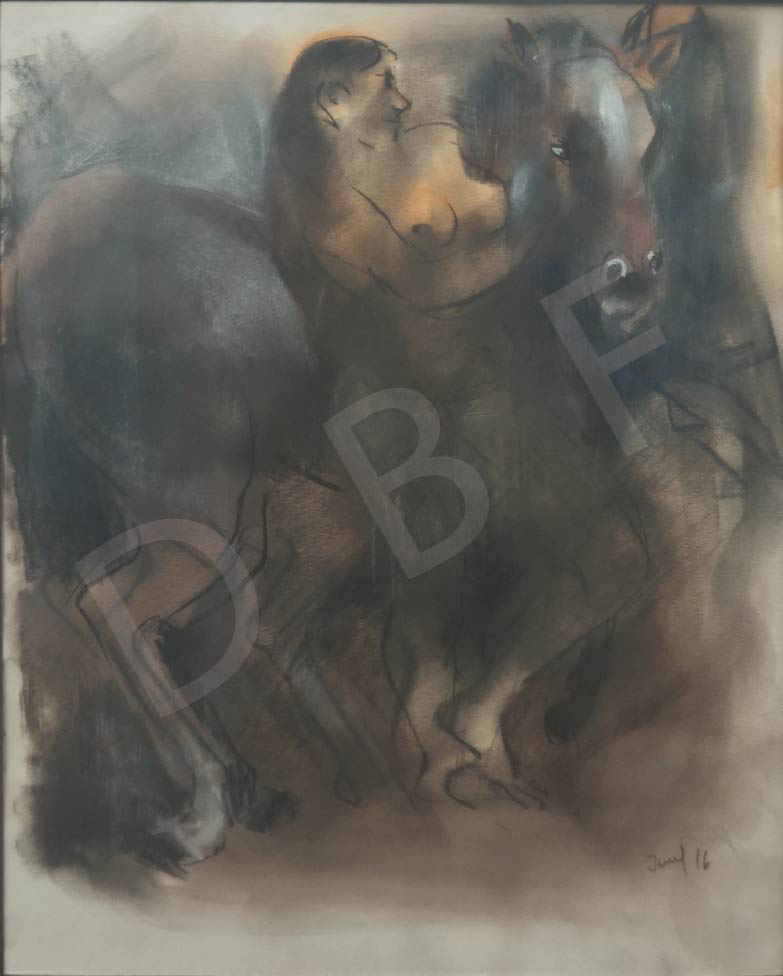
Jamal Ahmed is one of the major exponents of realism with a penchant for portraying communities living by the rivers and the Bay of Bengal. Born in 1955 in the city of Dhaka, he graduated in 1978 from the College of Arts and Crafts, now Faculty of Fine Arts, University of Dhaka. From 1980 to 1982, he completed a two-year research course at the Academy of Fine Art in Warsaw, Poland. Later he moved to Japan and studied oil painting at the University of Tsukuba and earned his post-graduation degree in 1986. Known for his dexterous handling of brush and colour in translating familiar scenes into powerful images, Jamal soon took to painting the models representing rural Bangladesh. He has become well known for his pictorial technique that applies sweeps of colours and textured areas against which he develops his humans and birds using an off-hand naturalism that lends his works a quality of their own. If his realistic rendition of pigeons and horses have made him popular, his gypsies, fishermen, and the troubadours have secured him a place among the greats of Bangladeshi art. His prolificity has earned him numerous accolades, including the Grand Prize at the 11th National Art Exhibition at the Bangladesh Shilpakala Academy in 1994; the Grand Prize at the 14th National Art Exhibition at the Bangladesh Shilpakala Academy in 2000; the 2nd Best Prize at Artist’s Association Exhibition in 2000; an Honorable Mention at the 10th Asian Art Biennale at the Bangladesh Shilpakala Academy in 2001. He currently serves as a professor at the Department of Drawing and Painting at the Faculty of Fine Art. He received the Ekushey Padak, the second highest civilian award in Bangladesh, in 2020.
Sundarbans


Flying in the river
Crisscrossed by countless rivers, estuaries, streams and creeks, Bangladesh is called the land of the rivers. This work is Jamal Ahmed’s early take on the fishing community whose only livelihood is dependent upon the rivers. Jamal captured a slice of their life in this woodcut print titled “Fishing in the River”. Executed in 1984, this signed and dated work is an early signal of his long engagement with the riverine life of people living across the delta. The two fishermen on two separate boats and the fishes that are swimming in the river are a far cry from the naturalism he would soon develop as his only preoccupation. The fishes look conspicuous and are presented as objects of attention in this smallish piece – they are more like emblems than real-life creatures. Though fishing communities across the country now live a life of hardship as resources are only diminishing, the work testifies to a time when abundance of fish once ensured sustainability.
Art Style
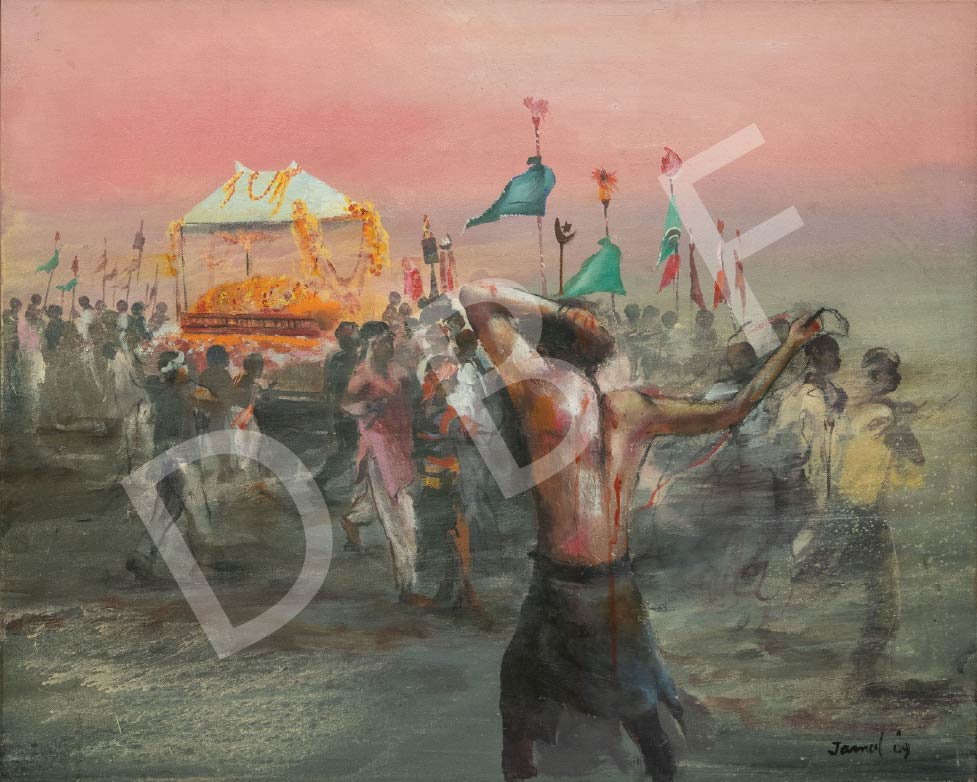
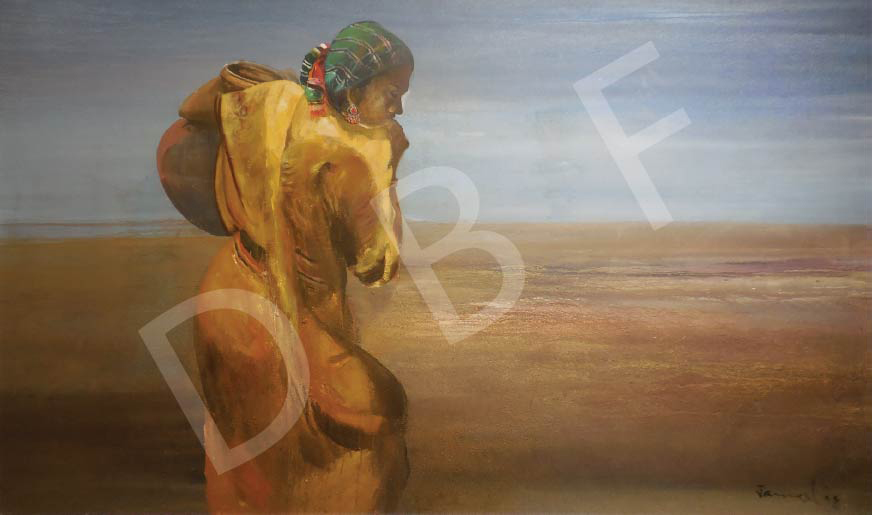
Eminent artist and professor of fine arts Jamal Ahmed is recognized for his naturalistic approach to art. He shows exceptional acumen as he brings to life his topics of pigeons, bede and fishing communities as well as models he chooses to turn into his muse. Though his prime concern has been the beauty of nature, especially in landscapes, his painting captures life of ordinary people, the agony and ecstasy they experience in their day-to-day activities. The wash treatment he applies to each of his painting is a unique way to lend the image an atmospheric quality. The earthy colours, the occasional bright red or orange, together enable the artist to capture some essential features of any chosen subject matter he attempts to tackle. In many of his works he situates his subjects on the river banks or the seashore, depicting them against an overcast sky to add an element of drama. The scenes he paints unfold like glimpses into the life of the ordinary people in the delta while his painterly technique helps to achieve a naturalism of his own.
Gallery
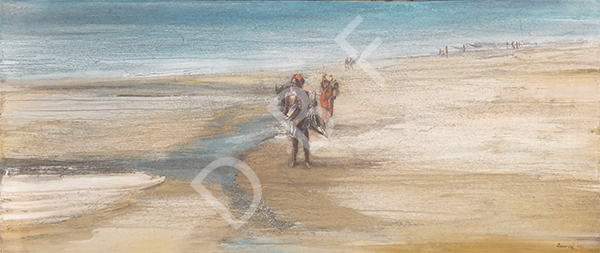
Title: Char
Size: 36 x 84 inch
Year: 2004
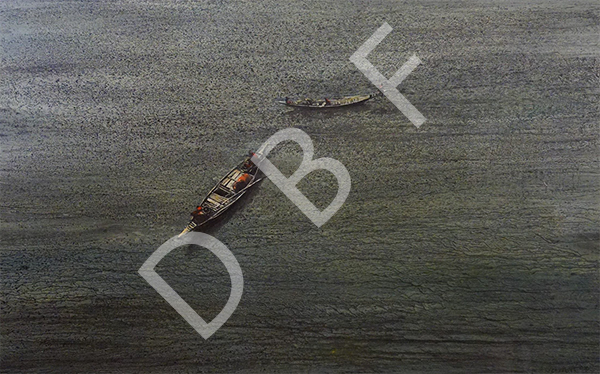
Size: 26.5 x 41.5 inch
Year: 2004
Artist: Jamal Ahmed
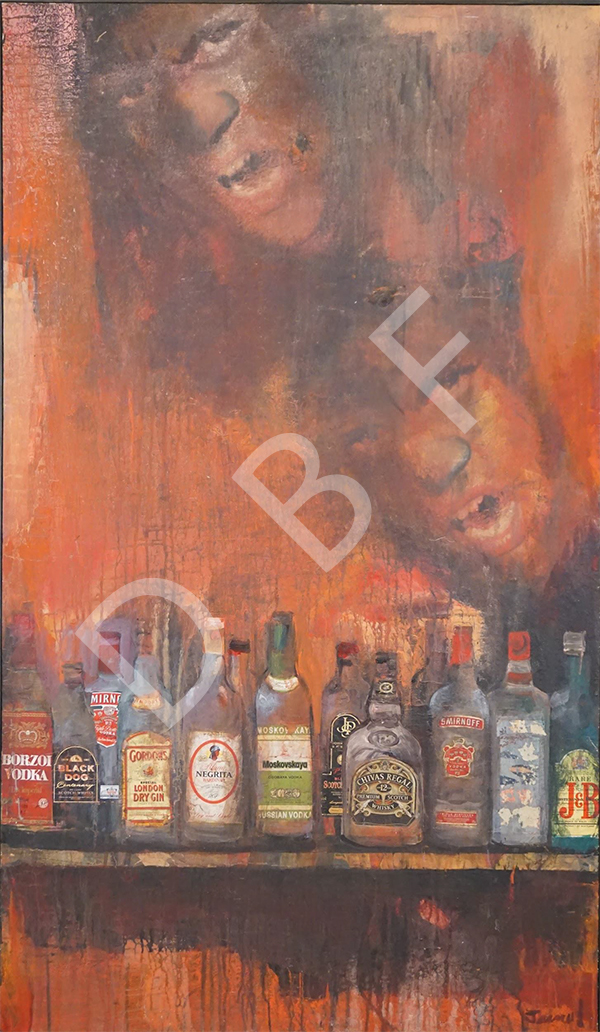
Title: Still life
Size: 60 x 35 inch

Title: Studio
Size: 59 x 47 inch
Year: 1997
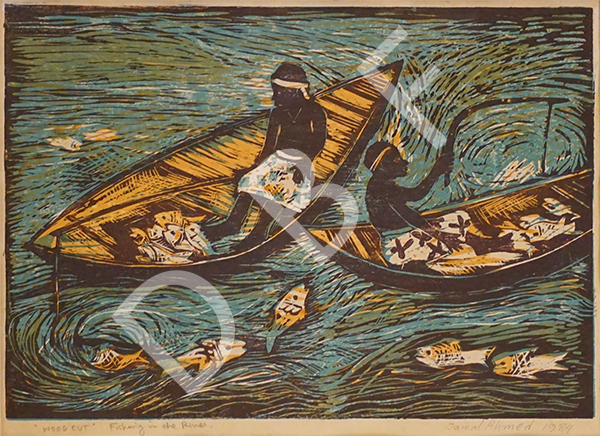
Title: Fishing in the river
Size: 11 x 15 inch
Media: Wood Cut
Year: 1984

Size: 27 x 42 inch
Year: 2004
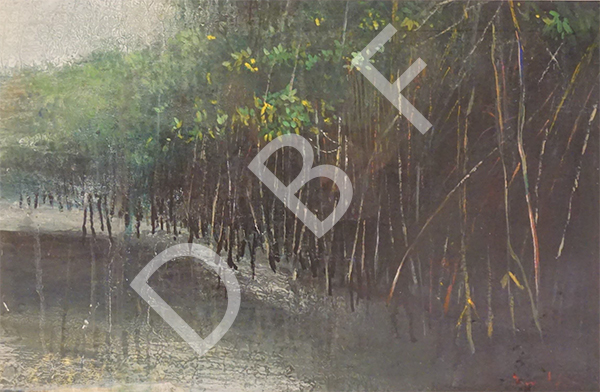
Title: Sundarbans
Size: 14 x 21 inch
Year: 2003
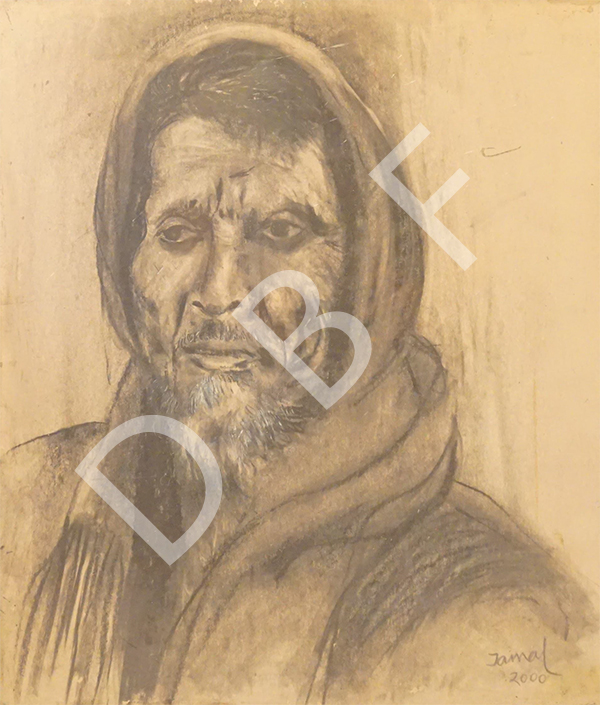
Size: 21 x 18 inch
Year: 2000
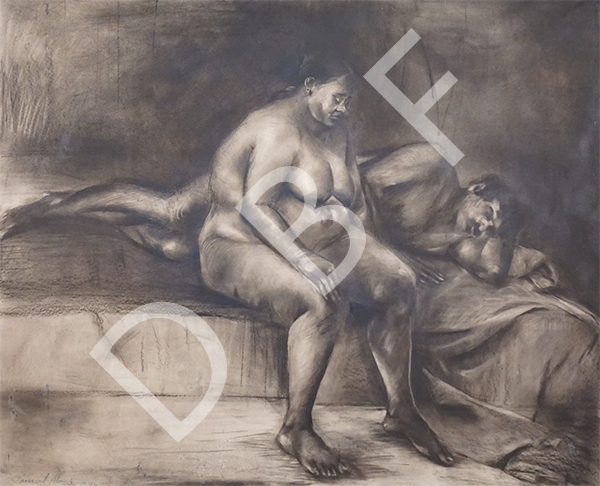
Title: Couple
Size: 47 x 58 inch
Year: 1992