
Novera Ahmed’s name remained shrouded in mystery for too long following her exit from the country in the early 1970s. After years of historical dredging and research done on her life and art, she is now considered a pioneer of modern sculpture in Bangladesh. In the 1950s and 60s Dhaka, she was the region’s most prolific sculptor. However, this work entitled La Baleine, bronze edition ¼, belongs to the phase after she moved to Paris. It was part of the series she developed after she had shifted her approach to art from early formalesque style to a primordialist mode of expression. In both form and medium, the work is a departure from the cement sculptures she had done in Dhaka and showcased in her historical solo exhibition in 1960. Novera’s artistic trajectory flowed in many directions and this particular bronze edition forcefully brings to the fore the primitive spirit that presides over many other bronze sculptures of this period. Baleine means whale in English and as she depicts the sea mammal, in her work it almost becomes a shorthand for the marine creature.
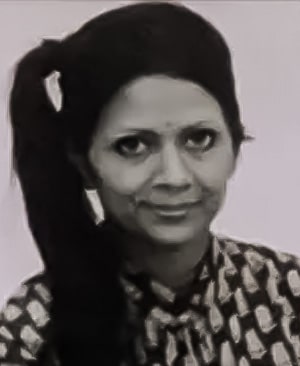
Novera Ahmed
Novera Ahmed was a pioneer of modern sculpture whose illustrious career began in Dhaka in the late 1950s. Born on 29 March 1930, in Calcutta (now Kolkata) of the then Bengal Presidency, British India. She left Dhaka in 1951 after she was awarded a diploma in design in the modelling and sculpture course from Camberwell College of Arts in London. At Camberwell, she studied sculpture under the tutelage of eminent Czech sculptor Karel Vogel. During her study in London, she met Sir Jacob Epstein and had the opportunity to receive hands-on knowledge on European sculpture. She received further training in sculpture under Italian sculptor Venturi Venturino in Florence. Novera’s contribution to art has long been a subject of neglect. It was through the intervention of a number of researchers that she finally received her due recognition for her pioneering works. She introduced modern sculpture into what was then East Pakistan, now Bangladesh. She produced one of the very first murals on the frieze at the Central Public Library in 1957 and the first open-air sculpture (Cow with Two Figures) in 1958. She had her first solo exhibition entitled “Inner Gaze” in Dhaka in August 1960, which showcased about 75 works from her most fertile years – 1956 to 1960 – mainly executed in cement. She produced about 100 sculptures in Dhaka, of which 34 are currently in the Bangladesh National Museum collection. Novera’s second major exhibition was held in Lahore in 1961. She left the region for France and made Paris her permanent home in 1970. A major solo exhibition was also held in Paris in July 1973. The Bangladesh National Museum held a retrospective show with their collection in 2015. She was awarded Ekushey Padak in 1997 in absentia. She died on May 6, 2015 at a hospital in Paris.
LA BALEINE


Le Heron
Le Heron, or The Heron, is a 1982 sculpture by Novera Ahmed. She sculpted the bird with cement and iron and brought it to life with her expert workmanship, showing a sincere love for the craft. The slender-legged, long-necked freshwater bird, often remembered for its elegant gait and beauty, stands for tranquility and determination in Novera’s domain. There are rural poems and proverbs that have stayed in public memories through which this species has acquired the status of the hermit bird. Its ability to remain motionless while it focuses on its prey earned it this special niche in popular culture. The unusual hunting technique signifies determination and drive for life. Through this work, the sculptor also almost reveals her own personality, shedding light on her solitary quest for independence and growth, one which has been blighted by an accident in the early 1970s. Novera’s heron is dark but it radiates a thousand rays of hope and possibility.
Artist Art Style
Novera Ahmed’s early works bespeak her alignment with two distinct sources – the modern formalesque of European origin and the primitivism found in the earthen dolls in the Bengal delta. She made this bridging of the two worlds visible in both form and spirit. Novera was one of those rare talents whose works are situated at the intersection of figuration and abstraction. In her early career in Dhaka, when she was at her most prolific, Novera dealt with human figures and animal forms. The formal rigour she brought to her anthropomorphic and animal forms in her early works done in cement made her one of the most important second-generation artists. Later she used iron and bronze and her works also evolved to adjust to her desire to capture the “primal spirit” in both man and animal. As she transitioned to the new phase, she used plane crash remains from the US army to make her sculptures. After she met with an accident in Paris and became wheelchair bound, she worked on a series of paintings where animals and humans entered a fluid, colourful psychedelic realm. Later her sculptural works assumed a meditative character, of which “Dance of the Sun” (1972), “Djin” (1973), the “Sunflower Women” (2002) are her widely appreciated works.
Gallery
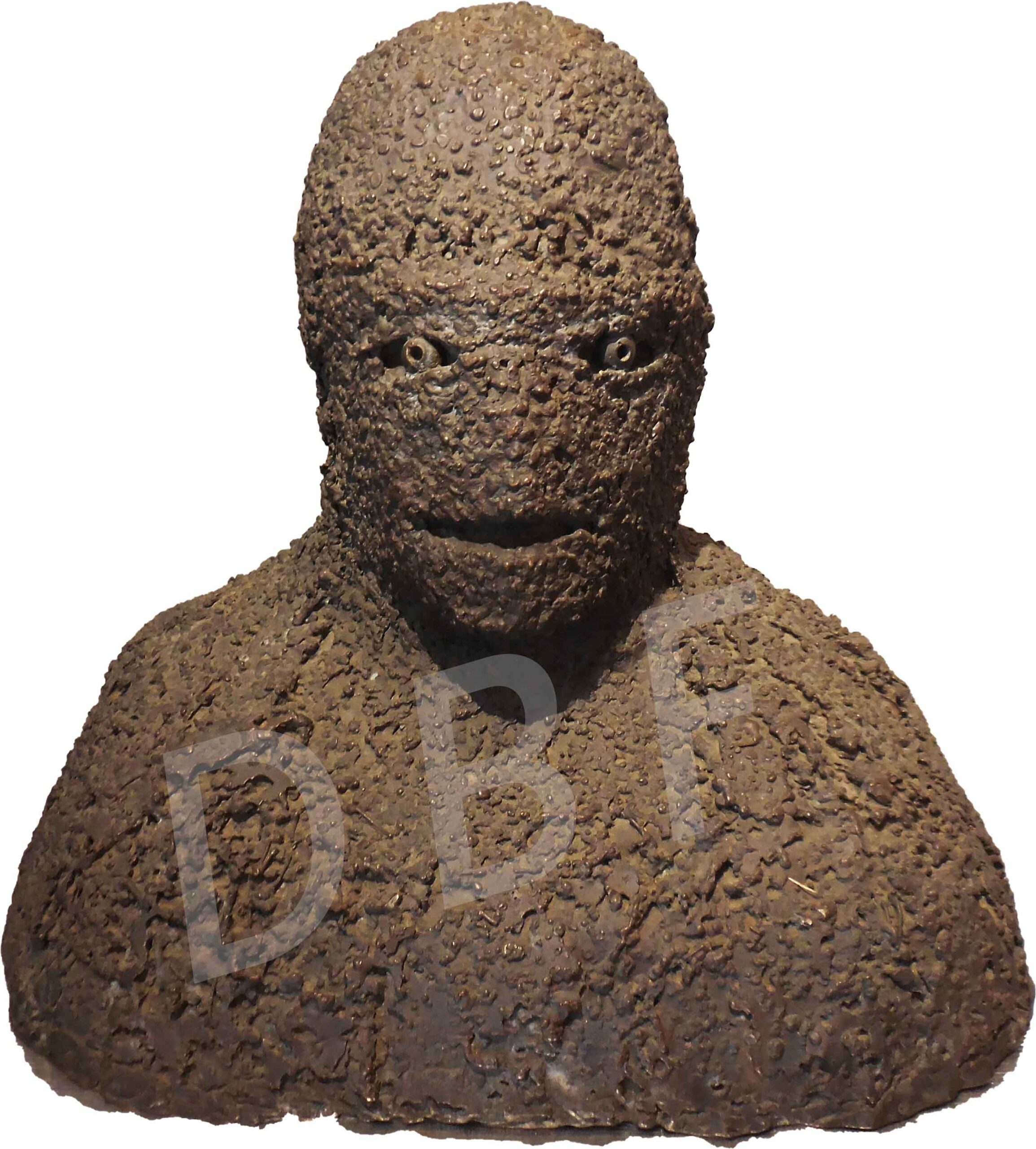
Title: Le Baron Fou
Size: 43 X 37 cm
Year: 2009
Material: Bronze
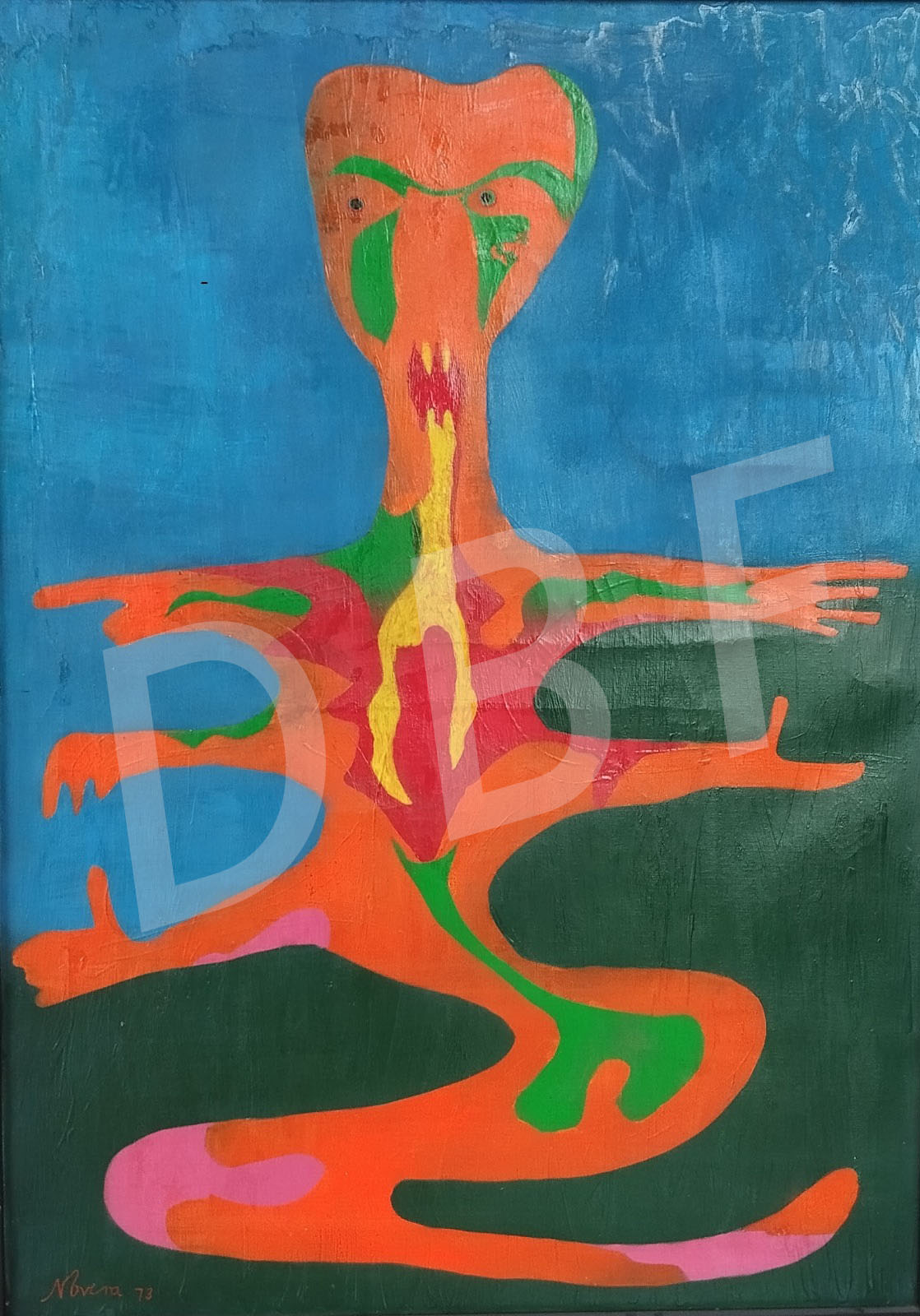
Title: Snake
Size: 91 X 64 cm
Year: 1973
Media: Spray Paint on Canvas
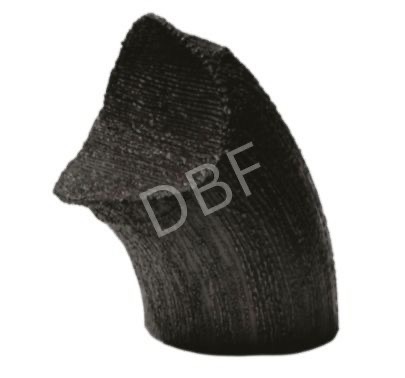
Title: ‘La Baleine’
Size: 57 X 32 X 28 cm
Year: 1994
Material: Iron
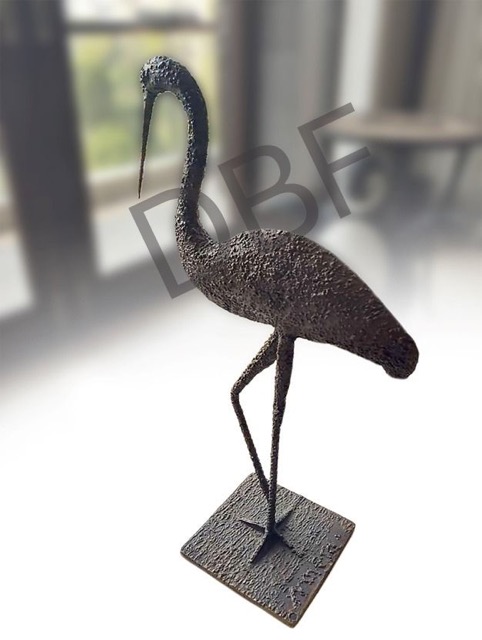
Title: ‘Le Heron’
Size: 100 X 60 cm
Year: 1982 II
Material: Iron