
Tejosh Halder Josh’s “Childhood Memories” is a very personal work. It linked to his feelings about his own childhood. Executed in 2006, this fibreglass sculpture freezes a moment of childhood companionship for all to feel nostalgic about the time when everyone remains attached to myriad friends and family members. We grow up, grow apart and grow out of our innocence but the things that keep us going are the memories of the days that are already behind us. The work shows four children sitting in pairs, whiling away the time. One pair is seen making small talk while the boy in the other pair tries to attract the attention of the girl child, the smallest among them, as he points at something hovering over them. The dark hue makes the figures look as if they are made of cement. Tejosh Halder’s figures are expressive as the sculptor chooses to leave signs of the touch of the hand in many ways.

Tejosh Halder Josh
Born in 1982 in Gopalganj, Tejosh Halder Josh completed his Bachelor of Fine Arts in 2007 from the Faculty of Fine Arts, University of Dhaka, and Master of Fine Arts in sculpture at the Visva Bharati University, West Bengal, India, in 2010. Tejosh Halder’s sculptural creations in bronze, wood, fiberglass, and terracotta now accompany many modern buildings in Dhaka. He held a solo exhibition at the Bengal gallery of Fine Art in 2007. His works have been showcased in many national and international-level exhibitions, including at the Dhaka Art Summit, from 2011 to 2018; India Art Fair in 2017 and 2018. He has received various scholarships and awards for his contribution to sculpture, including an Honorable Mention at the 12th Asian Art Biennale, Bangladesh, in 2007; the Shilpacharya Zainul Abedin Gold Medal at the Faculty of Fine Arts, University of Dhaka, in 2005. In 2010 he received a scholarship from Visva Bharati, Shantiniketan, India. He received the two-year Bengal Foundation Scholarship in 2008. For his contribution in art, Tejosh Halder Josh was conferred the Ekushe Padak, country’s second highest civilian award, in 2026.
Childhood Memories


Talpatar Pathshala
“Talpatar Pathshala” is a 2007 sculpture by Tejosh Halder Josh. It is his tribute to the age-old tradition of what is known as “gurumukhi bidya”, or a Pandit-led mentorship model. Accordingly, children used to take on mile-long journeys to attend schools run by a well-known guru who would give them lessons sitting under a tree. The sculptor used fibreglass and painted each figure black while the talpatas, or the dried palm leaves, are also rendered in black. The presence of the teacher and the attentive students have all been given a cast-iron look, which only accentuates the nostalgic aura of the piece. The cluster sparks memories of childhood as it looks like a re-creation of the scene from a village pathshala, or school. Crafted with emotion, the ambience the artist has created remains with the viewer.
Art Style
Tejosh Halder Josh specializes in modelling, mould-making, stone and wood carving, bronze, fiberglass and concrete casting. His expertise has a direct bearing on his practice. As a sculptor, Tejosh’s works are engaged with the notion of space, objects, architecture, heightening the sense of perception in the spectators. Conceptually he situates himself between representationalism and formalism. His works suggest that he takes his cue from real-life characters and objects only to transform them into his own sculptural forms bearing the touch of his hand. He casts a wide net as he tends to work across a spectrum of concepts, making representation of the real central to some of his works while he veers into abstraction with the rest. The architectonic style he has developed over the years with a sharp focus on modular forms is the result of his alignment with the globalised forms of aesthetic modernity.
Gallery
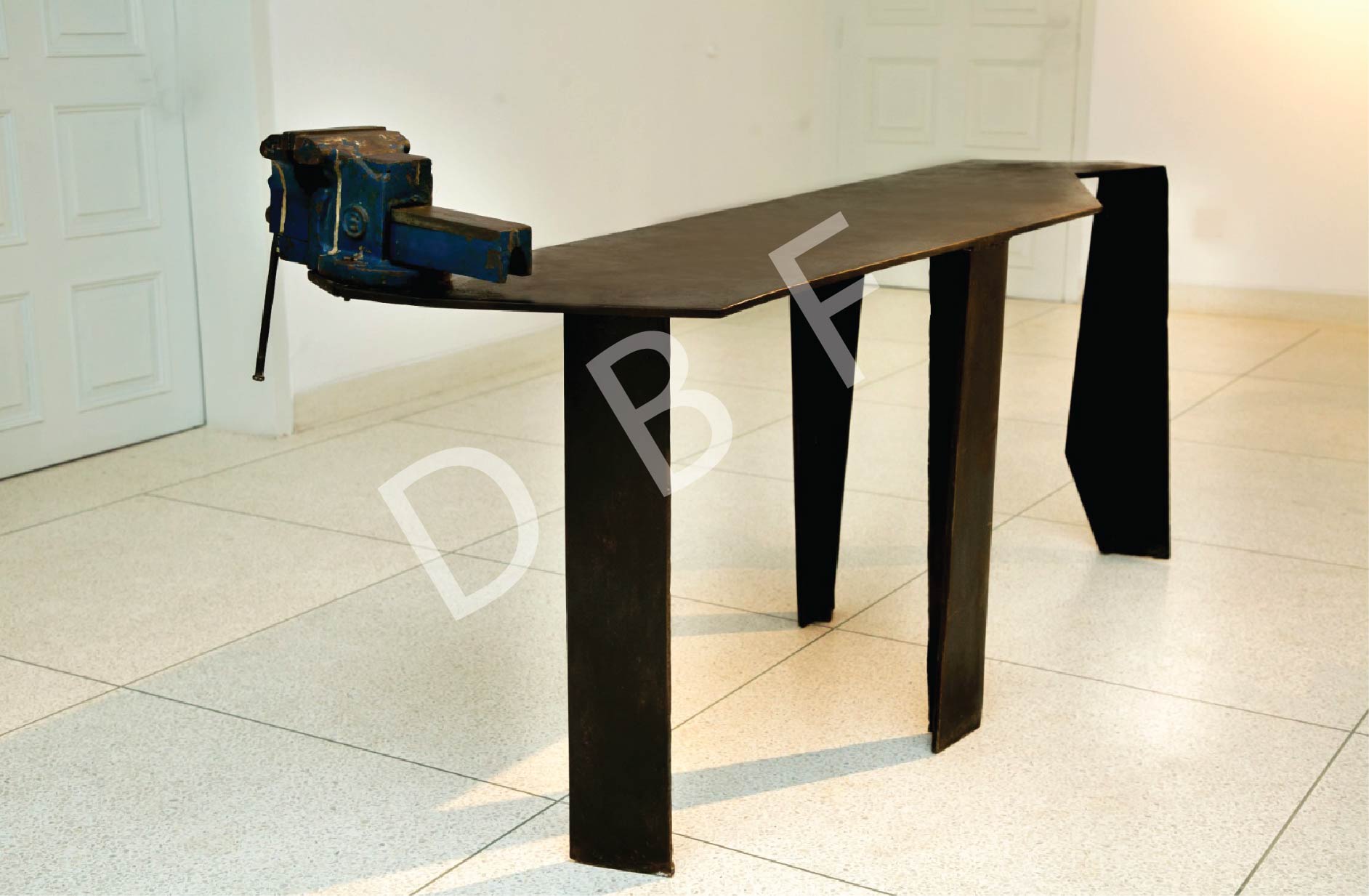
Title: Table Becomes a Sculpture
Material: Mild Steel
Size: 200/51/78 cm
Year: 2016
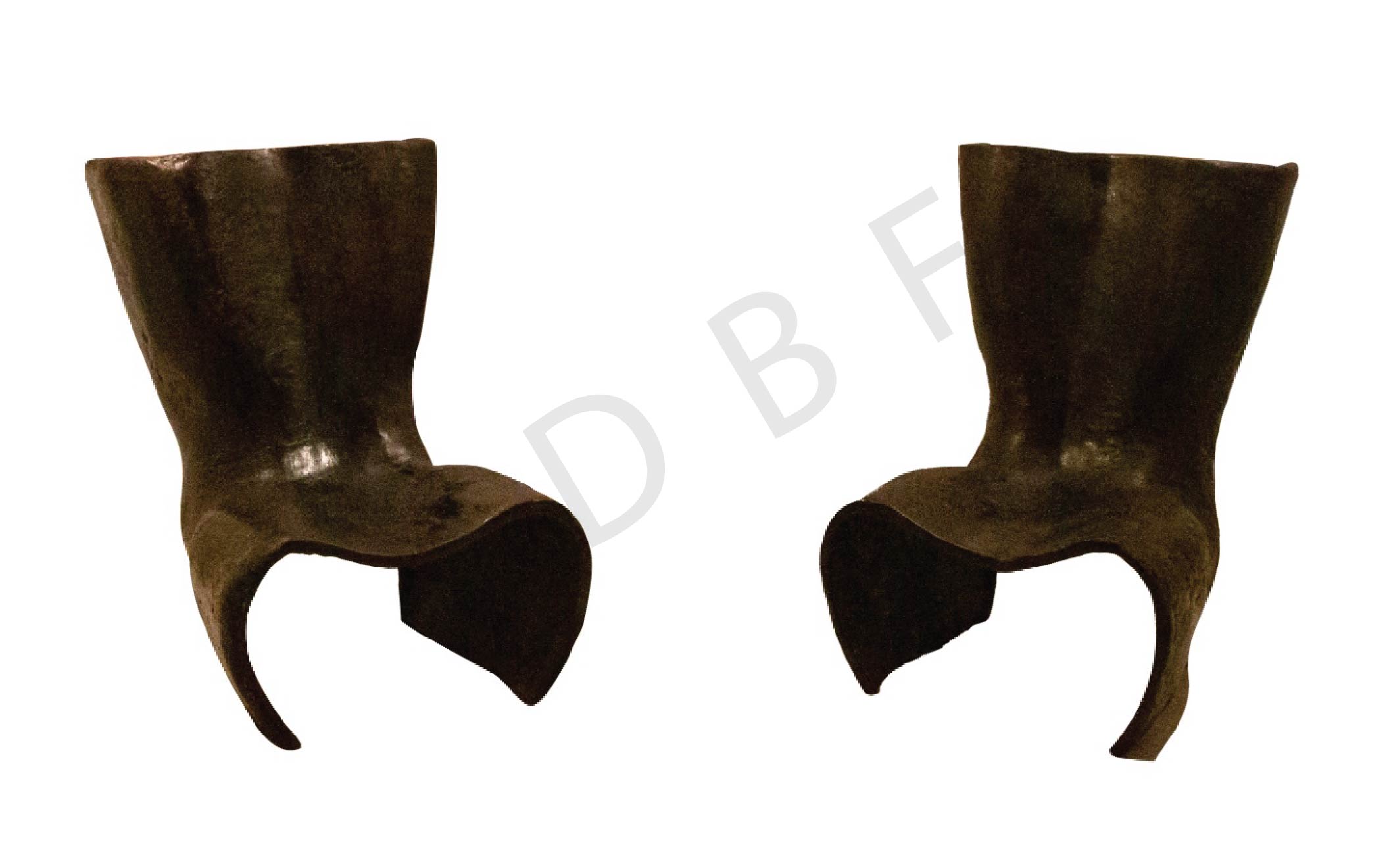
Material: Metal
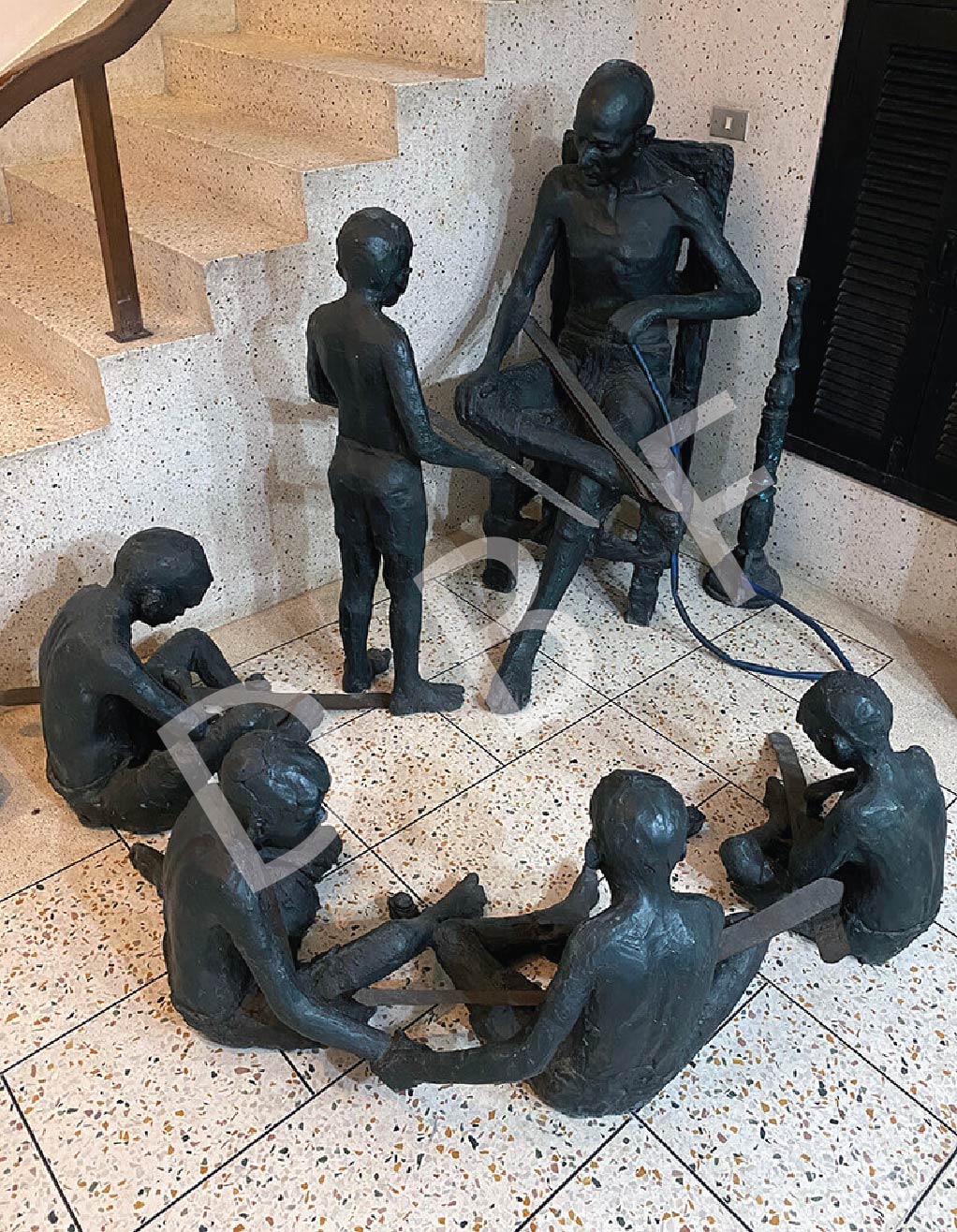
Title: Talpatar Pathshala
Media: Fibreglass
Year: 2007
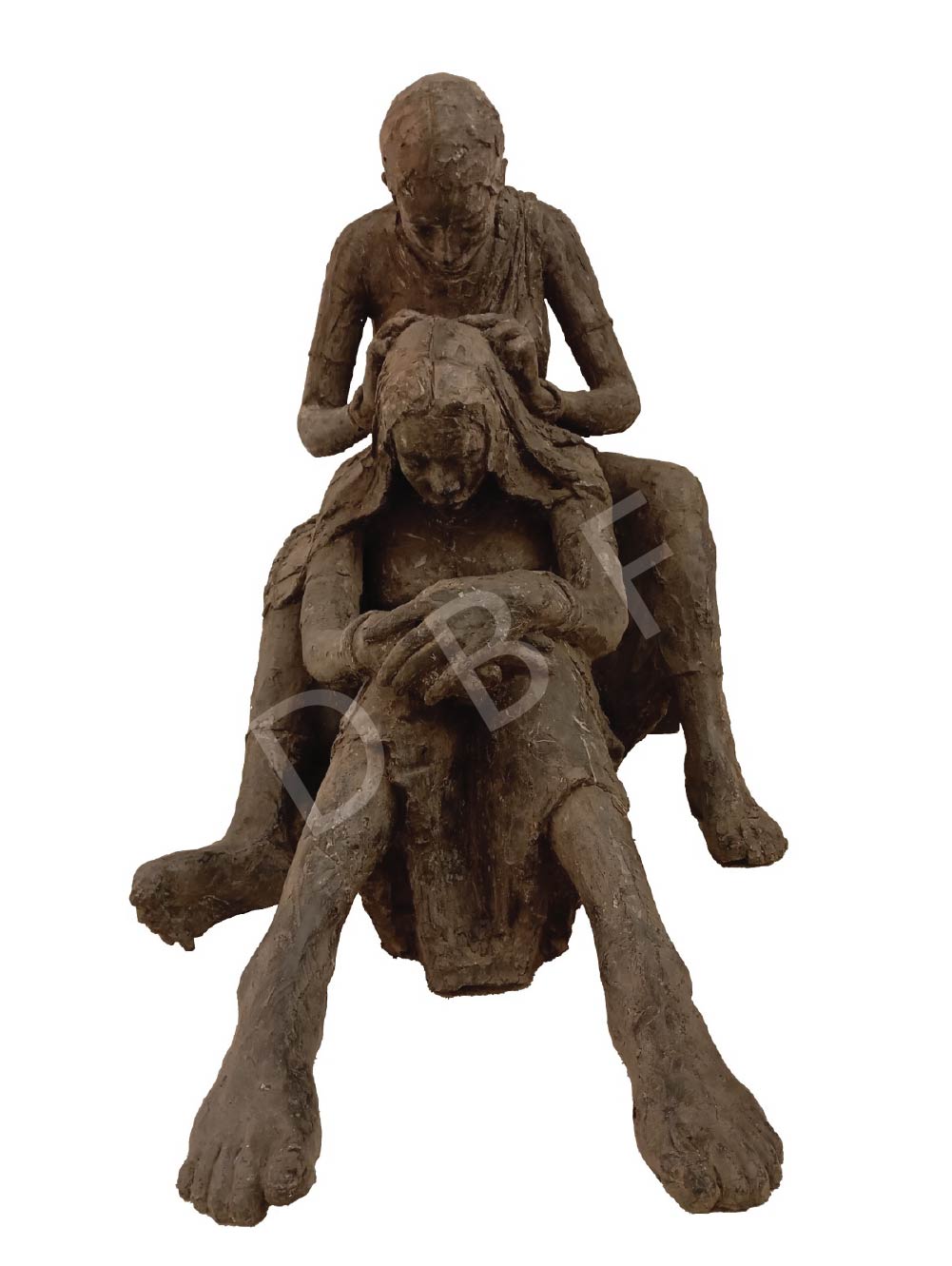
Media: Fibreglass
Year: 2007
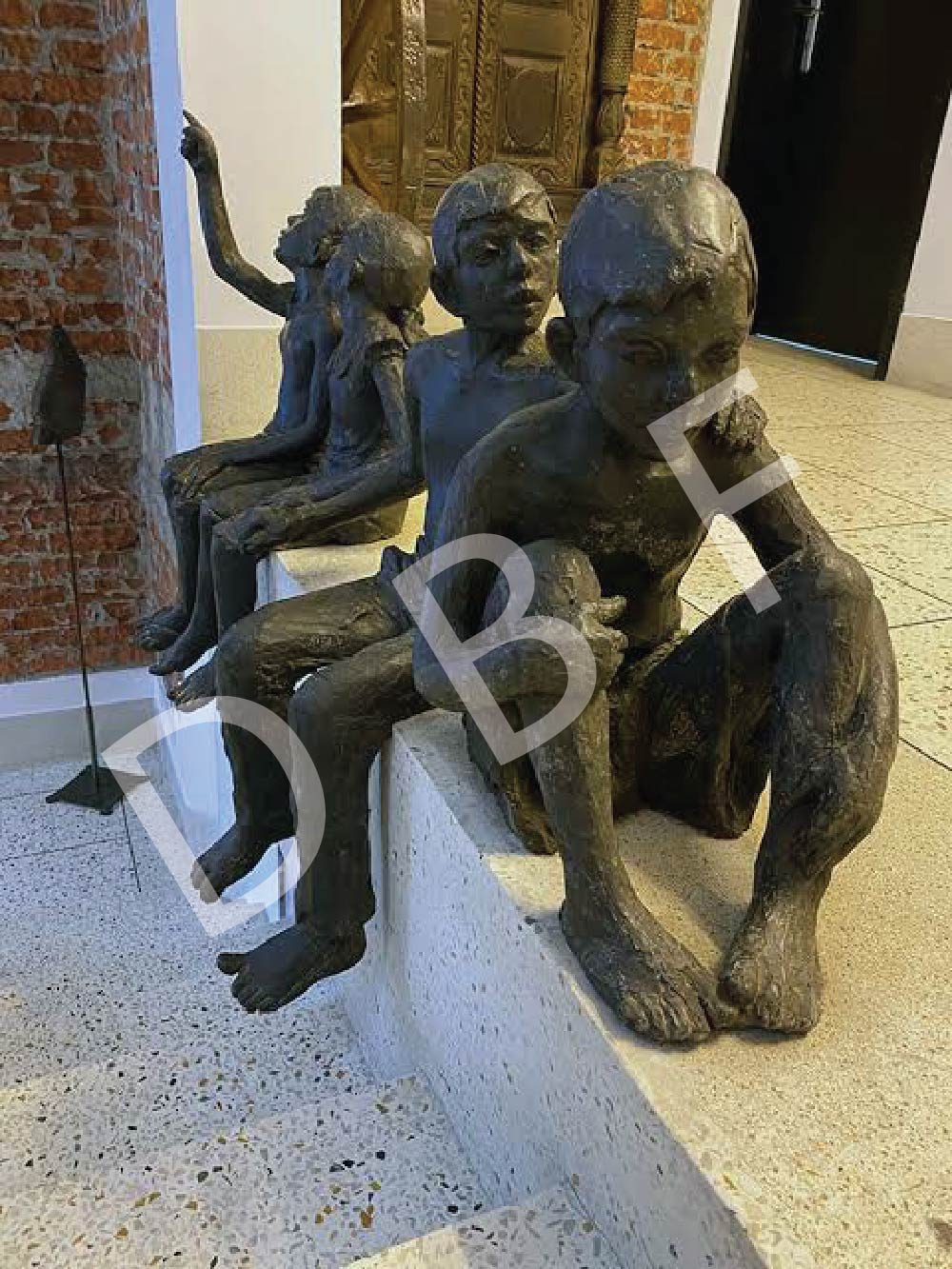
Title: Childhood Memories
Media: Fibreglass
Year: 2006